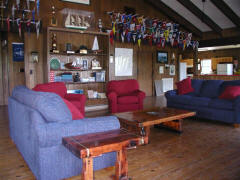
Old Hickory, Tennessee
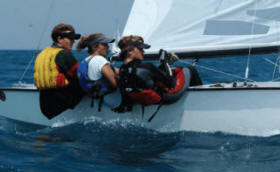























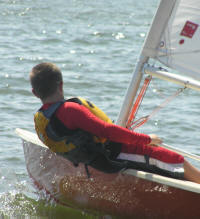




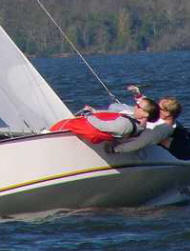
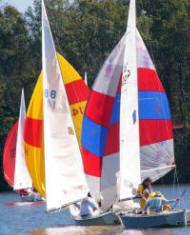
In the early 1950’s, a handful of sailing enthusiasts, most of them Penguin, Thistle and Lightning
owners, formed the Nashville Sailing Association For the next few years, they spent weekends racing
their boats ‘round and ‘round Bush’s Lake, little more than a pond, in North Nashville.
While their
facilities were scant, their enthusiasm for racing was considerable, and so they joined in 1954 with The
Nashville Tennessean, Nashville’s largest newspaper, to sponsor the city’s first sailing regatta, "The
Tennessean". The regatta grew so much the location had to change to a larger body of water, Kentucky
Lake.
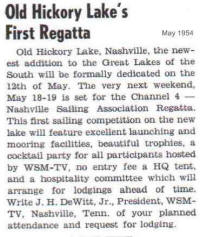
Then on May 12th, 1954, Old Hickory Lake was officially opened. The Nashville Sailing Association held
the first Regatta on May 18th and 19th. One of the results of the impoundment was the development of a
small island residential community named Harbor Island. See
Tennessean Article.
By 1961, some of the Harbor Island landowners,
who were themselves sailors, banded together with members of the Sailing Association to organize a yacht
club. The group of sailors asked The Harbor Island Landowner’s Association if they could use a small
portion of the island as a base for their sailing activities. The association agreed and the sailors
named there new sailing club Harbor Island Yacht Club.
A dirt road turned from the causeway and wound down to a rocky shoreline. Boat launching was, at best,
precarious, so the sailors built floats, anchored them in the harbor, and left their boats, mostly
Thistles and Lightings, on them. Access to their boats was by small dingy. It was not long before the
club founders took up a collection and financed the first improvements to their facilities. They
constructed a wooden seawall, a floating dock, and a gathering place at the end of the day, a wall-less
shed, complete with pseudo restrooms at either end. Working parties transformed the shed into a
clubhouse. They enclosed the shed, added indoor bathrooms, a fireplace and outside decks. A little
sailing here, a lot of work there, and they were fusing their club into a respectable organization.
As word spread and more and more sailors joined the bustling club, the membership found that their
treasury had swelled along with their numbers. The members hired a contractor to build a kitchen on the
north end of the clubhouse, extend the deck, and add a restroom. Their zeal to improve the waterfront
facilities led to more working parties. They constructed a floating dock off Green’s Point, spread
crushed stone over the dirt to form driveways and boat and car parking areas and poured a concrete
launch ramp.
By 1969, HIYC was solvent enough to float a bank loan to purchase three adjoining lots. The lots were
graded and paved for boat storage and an electric boat hoist. Along the new concrete sea wall, the club
added concrete floating docks, additional parking, and a sewage disposal system. The club called on the
membership to roof the clubhouse deck.
In the spirit of cooperation, the US Corps of Engineers established a NO WAKE AREA in the harbor,
approved moorings for cruising boats, and a future dock to run parallel to the causeway. That winter,
the Nashville Bridge and Barge Company loaned the club a floating crane to clear the harbor large rocks.
In April 1976, the membership voted to construct a new clubhouse to provide adequate space and
facilities to accommodate the burgeoning yacht club. Architect-Engineer-Associates, with Charley
Warterfield at the helm, created the plans and hired a contractor in October. Unfortunately, the
contractor declared bankruptcy in early 1977, leaving the skeleton of the new building a forlorn sight
in the winter snows. The Board began negotiations with the bonding company, a step that was to last
eight long, frustrating months. Finally, in the fall of 1977, HIYC received a satisfactory cash
settlement from the bonding company. A new contractor completed the new clubhouse in the early summer of
1978. Once again, members offered their pocketbooks and volunteered to furnish, equip, and decorate the
spacious facilities. In 17 years, HIYC had come a long way from the winding dirt drive to the handsome
new structure.
Since 1978, members have upgraded and repaired docks, added hoist, and moorings, landscaped the grounds,
sunk poles to ring the driveway and built dinghy racks. Private funds have financed and built two
private docks with slips, both of which will revert to the Club after a specified time.
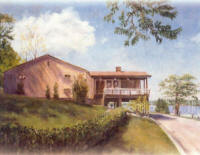
In 1980, the club remodeled the original clubhouse into a caretaker residency.
In 1981, the Board of Directors concentrated on three areas of improvement, to reduce the indebtedness
of the club, to attract young, new members, and to increase cruiser-racing participation.
In 1983, the club was in debt. To reduce ‘The Plan’, (see Bylaws Article (II)), was drafted, ratified
and executed to perfection. The membership voted to institute a new type of membership –the Junior
Active (see Article IV, Membership) in the ongoing efforts to attract new members interested in sailing.
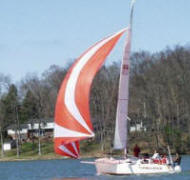
Cruising class sailors had implemented successful summer and winter racing series that included not only
those who owned cruising boats, but anyone interested in competitive sailing.
In 1984, a two-day endurance cruiser regatta, named
The March Winds Regatta, began. This race ended the
Winter Frostbite racing series and inaugurated the spring racing season among mid-south yacht clubs.
True to form, the March Winds came in on Saturday like a lamb with a light air drifter, and out like a
lion on Sunday as a force six howler.
In 1988, a small group of avid sailors visualized a fleet of their "own kind", a style only known to
Cruisers. With enthusiasm, hard work, and dedication, the Cruising Fleet was born! Membership in 1988
was a unique group of 14. Into the 21st century, membership reached 33 individuals and families and
expanded to include those who owned all kinds of sailboats. The cruising fleet actively worked to form a
nucleus for all individuals who love sailing. Ultimately, the purpose was to allow all individuals the
opportunity to experience sailing in an atmosphere of good fellowship.
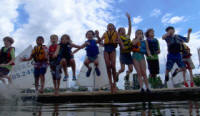
Mandy and William Hofmeister were instrumental in forming "Miss Mandy’s
Sailing Camp", the nucleus of
which was the many parents and juniors who sail at HIYC and at
Percy Priest Yacht Club. From this small
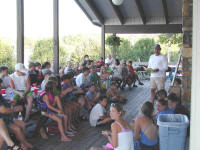
and under funded beginning has come Harbor Island’s Junior Program – comprised of a sailing camp which
now runs four weeks in June, several regattas aimed specifically at junior sailors and an ongoing
contingent of juniors participating as crew and skipper in the many club regattas. Many of the children
that have graduated through the program become coaches in the program by completing a U.S. Sailing
Instructor course taken over two weekends in the spring. The Junior Program is one of the best outreach
efforts the club has to offer. Spanning several states, it is available to those who cannot afford to
pay, through membership scholarship funding and other interested parties.
In the early nineties, the membership decided to replace the docks and the committee boats. Thom
Garrison with his volunteer committee of helpers tackled the Courtesy Dock. The north side of the
Courtesy docks provides overnight parking for cruising boats and slips for the race committee boats. The
south side provides a launch area for dinghies. It turned out to be the most labor-intensive dock
project the club undertook. In hindsight, it would have been easier on Thom and his volunteer helpers to
let the experts tackle this job. The Courtesy dock became a very popular amenity, sometimes too popular
as there was limited space and many takers. Other dock projects undertaken included a new ramp and a
swimming dinghy dock anchored to Green’s Point.
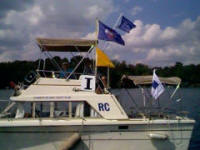
The race committee starting boat, a 25’ Carver named "Moon Pie", replaced the Caldwell/Wolery Race
Committee houseboat. The mark boat, a center console Proline named "BB2" replaced the infamous green
boat named "BB1".
With the passing of the Caldwell/Wolery team, the Club asked Bruce Richards to form the all-volunteer
Race Committee so that we could continue to run our regattas. Over the years, this has worked admirably
though not without the occasional mess. Most Club members have led or served on various Race Committees,
leading to a build up of knowledge about running races and regattas throughout the entire membership.
Three other projects deserve mention. For about fifteen years, small dinghies were stored on a rack
constructed by Chip Broome and Tom Bond, a small structure measuring approximately twelve by fourteen
feet. William Hofmeister with his volunteer committee of helpers replaced this structure with a much
larger structure located on what is now the Laser lot. The goal was to create an easy method for junior
and senior members to store and launch Club Lasers and dinghies.
Bruce Campbell and Bill Killebrew used the materials from the old rack to construct a storage building
for Race Committee supplies on the south end of the property. With borrowed and bought materials, some
sweat equity; the multi-purpose structure had new life. First as storage building for Race Committee
supplies, then as the Lightning Bar and Grill", complete with bar and serving hatch; then as the Tiki
Hut; after Bruce added decks and Tiki torches.
In 1997, after much discussion and after receiving numerous bids, the Club initiated an improvement
project to repair the thirty-year-old seawall and dinghy hoist. This was a much-needed improvement as
the old wall was slowly falling into the lake, slowly taking the hoist with it. However, a very
expensive project, this was clearly beyond the knowledge of Club members to undertake on their own. The
final cost of the new seawall exceeded the entire annual budget of the Club. Once again, the membership
executed "The Plan" to handle generate financing and the new seawall was a reality.
In 1998, as computers seemed to be in every home, Cully Ward and Bob Cotton developed a web site for the
club. This has proven to be a wonderful outreach method and internal communication tool. Then Commodore
Donna Moore became the first officer whose comments appeared monthly on the web site.
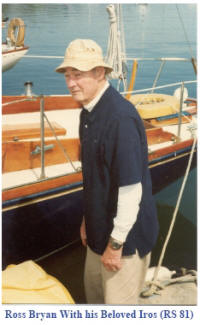
On May 7, 1999, Ross Bryan bestowed upon HIYC a very generous gift in the form of his boat, IROS, a
thirty-three foot Swiftsure sailing sloop. Ross wanted HIYC to use IROS for the promotion of youth
sailboat racing and cruising.
We made some improvements including, expansions of the Causeway, Concrete, and Wooden docks.
In 2004, a new drive at the top of the hill behind the clubhouse was completed and new sea wall was
constructed.
The Cruising Fleet made a concerted effort to bring the entire club together, dispelling the boundaries
of boat classes. Through the leadership of Ken and Sally Todd, the signature event that broke the
barrier, Cheeseburger in Paradise celebrating the king of cruising and parrot heads, was born. Social
events like "Cheeseburger in Paradise", "The Lobster Boil", and "The Shrimp Boil" provide the social
setting to get acquainted with new and get old friends while enjoying great food, music and
entertainment. Each year thereafter, the Cruising fleet created reasons to get together. Reasons like a
Piano Bar & Wine Tasting party, a BUNKO party, a Chili Cook-off party and an Oscar party.
Brock Short completed what he called "Grand Slam of Sailing", where he placed first in every major
regatta, (Change of Watch,
March Winds,
Cully Cobb 50K,
Tennessean,
Fall 50K &
The McDougal.
In 2005, the Corps of Engineers HIYC property lease expired. Joe Ballard worked with the Corp to obtain
a new 20-year lease for use of the waterfront area and 11 acres of water space for boat moorings. The
Corps cited the exemplary record of HIYC in using the leased property to promote safe boating activities
for young people through Sailing Camp and Sea Scout activities. The new lease limited the number of
moorings to 40.
In 2006, HIYC had a survey done to define the property waterfront boundaries. The survey results
indicated HIYC was not dependent upon leasing the Sailing Club Lot for access to the club property. We
have always had unrestricted access to the new clubhouse and launch ramp area over property leased from
the COE through the existing main entrance. This finding prompted the initiation of several projects.
Beth and John Marshall and the Mike Birk family lead a group of members that improved the appearance of
the main entrance and the old clubhouse. The Club was committed to keeping the appearance of the old
clubhouse neat and attractive in keeping with the appearance of the rest of the island community.
Ken Templemeyer, submitted a grant request to the Tennessee Wildlife Resources Agency for 75% of $14,000
for a dockside marine sewage pump out system.
Harbor Master Roger Maxwell replaced or upgraded the moorings in the yacht basin and poured a concrete
pad around the boat hoist improving launch and retrieval activities.
Due to the increasing memberships, the Board adopted a policy limiting a member to one space in the
water either at a dock or at a mooring and the Private Dock and Slip Policy was modified include mooring
assignments.
A commercial contractor replaced the vinyl flooring in the clubhouse kitchen. Bill Killebrew guided and
donated the labor to install hardwood flooring in the rest of the clubhouse. Forty members financially
contributed by purchasing a hardwood plank.
In, 2007 the Ken Todd and the board began negotiations with Harbor Island Homeowners Association to
purchase the original club house lot.
"The Fall 50K Regatta" was renamed "The Beesley Fall 50K Regatta" in recognition of Anne and Fred
Beesley's many club contributions and commitment to distance racing and cruising.
Wolf Creek and Center Hill Dam's potential for structural failure made headline news. Larry Boroviak led
efforts to develop a disaster and recovery plan.
Harbor Island Yacht Club remains the Mecca for sailing enthusiasts in and around Nashville. With a
racing program that continues to grow and change with the times and a clubhouse facility that has fed
150 tired racing sailors, the Club’s history has been an ongoing story of work and progress. With
continuing support from its members and an enduring spirit of fellowship, willingness, and enthusiasm,
this story will run as long as the currents of Old Hickory Lake.
|
|